


ACME 535 Silent Dog Whistle | Adjustable Frequency | Made in the UK
En stock
Impossible de charger la disponibilité du service de retrait
🎁 Christmas Returns: Orders placed from 1 Nov can be returned or exchanged until 15th Jan.
The ACME 535 is the original silent dog whistle — precision-engineered in nickel-plated brass in Birmingham, England, by ACME Whistles, the company that has been making the world's finest whistles since 1884. Inaudible to the human ear, the 535 emits an ultrasonic frequency that dogs hear clearly at distance. The adjustable frequency screw allows you to fine-tune the pitch to your dog's response, and the protective end cap keeps the mouthpiece clean between sessions.
For handlers who want to work their dog discreetly — without alerting game, disturbing other handlers, or drawing attention on a peg line — the silent whistle is an essential tool. One verified buyer called it an “Excellent training tool.” We agree.
- Silent to human ears — ultrasonic frequency audible to dogs
- Adjustable frequency screw — fine-tune to your dog's response
- Nickel-plated brass — durable, all-weather construction
- Protective end cap — keeps mouthpiece clean between sessions
- Discreet working — no audible signal to game or other handlers
- Made in Birmingham, England by ACME Whistles, est. 1884
| Specification | Detail |
|---|---|
| Model | ACME No. 535 |
| Material | Nickel-plated brass |
| Frequency | Adjustable (ultrasonic — inaudible to humans) |
| Features | Adjustable frequency screw, protective end cap |
| Origin | Made in Birmingham, England |
| Established | 1884 |

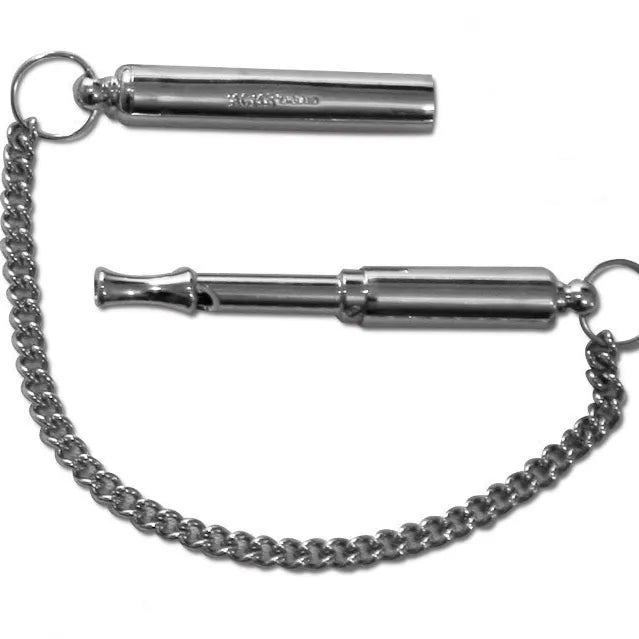
The ACME 535 is the original silent dog whistle — nickel-plated brass, adjustable frequency, and inaudible to the human ear. Precision-engineered in Birmingham by ACME Whistles, est. 1884. Fine-tune the pitch to your dog's response with the adjustable frequency screw. Protective end cap included. ★★★★★ “Excellent training tool.” — Natalie White, verified buyer.
Why We Recommend It
The silent whistle solves a specific problem: working your dog without broadcasting every command to everyone around you. On a driven day, a silent whistle means you can handle your dog without disturbing the line. In the field, it means game doesn't flush prematurely at the sound of a pip. The adjustable frequency is the key feature — every dog has a slightly different sensitivity range, and the 535 lets you dial in the exact pitch your dog responds to most reliably. ACME's brass construction ensures that pitch stays consistent, unlike plastic alternatives that drift with temperature.
Key Benefits
- Silent to human ears — ultrasonic frequency dogs hear clearly at distance
- Adjustable frequency — fine-tune to your individual dog's response
- Discreet handling — no audible signal to game, other handlers, or the public
- Nickel-plated brass — consistent pitch, all-weather durability
- Protective end cap — keeps mouthpiece clean between sessions
- Made in Birmingham, England by ACME Whistles, est. 1884
Bailey Says 🐾
My friends, I want to be transparent about something. I can hear this whistle. Craig thinks he's being subtle. He is not. But I appreciate the effort, and I do respond very well to it — there's something about the frequency that really cuts through when I'm focused on something interesting in the hedge. Natalie's dog apparently agrees. Excellent training tool. We are both correct. 🐾
Perfect For
- Handlers who want to work discreetly without disturbing game or other handlers
- Driven shooting days where audible commands would flush game prematurely
- Urban or suburban training where a loud whistle would attract attention
- Handlers whose dogs are particularly sensitive to high-frequency sound
- Experienced handlers looking to add a discreet distance control tool
- Anyone upgrading from a plastic silent whistle to a professional brass alternative
Specifications
- Model: ACME No. 535
- Material: Nickel-plated brass
- Frequency: Adjustable ultrasonic (inaudible to humans)
- Adjustment: Frequency screw on body
- Includes: Whistle + protective end cap
- Origin: Made in Birmingham, England
- Manufacturer: ACME Whistles, est. 1884
How To Use
- Remove the protective end cap before use and store it safely.
- Start with the frequency screw at a mid-point setting.
- Blow the whistle and observe your dog's response — ear movement, head turn, or attention shift indicates they can hear it.
- Adjust the frequency screw incrementally until you find the pitch your dog responds to most reliably.
- Once set, note the screw position and avoid adjusting further — consistency of frequency is key to reliable training.
- Use the same pip commands as a standard whistle: single pip to stop/sit, rapid pips for recall.
- Replace the end cap after each session to keep the mouthpiece clean.
Care Guide
- Replace the protective end cap after every session.
- Rinse with clean water after use in wet or muddy conditions.
- Dry thoroughly before storing to prevent tarnishing.
- Do not adjust the frequency screw unnecessarily once your dog's optimal pitch is set.
- Polish occasionally with a brass/nickel cloth to maintain finish.
- Keep out of reach of children.
Professional Insight
Training Academy Tip 💡
Before switching to a silent whistle, make sure your dog's response to whistle commands is rock solid on an audible whistle first. The silent whistle removes your ability to hear your own timing, which makes it harder to self-correct. Once your commands are consistent and your dog's responses are reliable, the transition to the 535 is straightforward — the dog doesn't care whether you can hear it or not. Also: mark the frequency screw position with a small dot of nail varnish once you've found your dog's optimal pitch. If the screw ever moves accidentally, you'll know exactly where to return it.
ProTrain Principle
Complete Your Setup
FAQs
Can my dog actually hear a silent whistle?
Yes. The ACME 535 emits an ultrasonic frequency that is inaudible to the human ear but clearly audible to dogs. Dogs have a significantly wider hearing range than humans, extending into the ultrasonic range where this whistle operates.
How do I find the right frequency for my dog?
Start with the frequency screw at a mid-point and blow the whistle while watching your dog for a response — ear movement, a head turn, or a glance in your direction. Adjust incrementally until you find the pitch they respond to most reliably. Once found, note the position and leave it set.
Can I use the same commands as a standard whistle?
Yes — the same pip patterns apply. Single pip for stop or sit, rapid pips for recall. The only difference is that you won't hear the whistle yourself, so consistent blowing technique matters more than with an audible whistle.
Why choose brass over a plastic silent whistle?
Plastic whistles can warp with temperature and moisture, causing the frequency to drift. Nickel-plated brass maintains a consistent frequency regardless of conditions — which is essential when your dog has been trained to respond to a specific pitch.
Is this suitable for a beginner?
The silent whistle is best suited to handlers who already have some experience with whistle training. Because you can't hear the whistle yourself, timing feedback is harder to develop. We recommend starting with an ACME Alpha (210.5 or 211.5) to build your whistle technique, then transitioning to the 535 once your commands are consistent.
Customer Stories
Customer reviews and stories will appear here
